Monday, March 12, 2007

Friday, February 16, 2007
"I've Found a New Baby" by Lester Young Trio (with Nat King Cole on piano and Buddy Rich on drums), 1946
Download track here (while it lasts).
Without a doubt my favourite piece of instrumental jazz, on par with Billie Holiday's later, rougher version of "Love Me or Leave Me" on Verve. Probably one of my favourite pieces of music, period. I have listened to this one track over and over since first discovering it twelve years ago and it has yet to tire me even slightly. There are so many angles from which I approach listening to it that it's hard to begin with one, but the sensible approach is the obvious one: a tenor saxophone sounds like a human voice, and Lester Young's saxophone sounds like the voice of someone whom you care about very deeply. It's by turns intimate, teasing, rousing, and reassuring, and as such much of this song is like a conversation with someone.
 But it's not so much a conversation as it is like listening to someone's thoughts. Maybe your own, maybe someone else's, maybe an archetypal anyone's. Somehow, in barely over four minutes of instrumental music, this track manages to impress upon the listener the sense of the most important emotions and routines of human thought. Transcribing the process of trying to make up its mind, the track progresses through all different levels of reason and emotional reactions thereto. Wonder, care, uncertainty, self-doubt, hope, reticence, confidence, and joy are amply present at various times, as well as less emotional moments of pensiveness, suspicion, reason, and verification. All communicated, of course, through wordless music.
What's astonishing about this track is the monstrous ability of all three of the musicians playing it. Each of the three is unequivocally a master of his instrument, and here all three play freely and wildly together in a manner that--in spite of the brilliant spacing and room all over the track--allows each one of them to be doing something astonishing at all times. Pres, Cole, and Rich spend this track being infinitely interesting, which is why it works so well to communicate so much without really saying anything. If it's an exercise in virtuosity, it's one that displays pure joy in playing (and, in some sense, of living) rather than a practiced digital ability.
The fact that it's so poorly recorded, scratchy and trebly, plays well in its favour too-- the extent that the joy and genius is electrifying in spite of what is clearly not a 100% representation of what the music actually was succeeds in suggesting some mythological quality to the musicians, that in person this would have been somehow beyond human. But the recording is enough-- you can instantly absorb the exuberance of Rich's swift, layered drumming, and the magnificent endowment of Cole's ability to express with a piano what otherwise no one would be able to express at all. All of which is tied naturally together by Lester Young's by turns swaggering, nervous, plaintive, thoughtful, and vivacious stream-of-thought saxophone. But it's not even the sound of a voice anymore-- that saxophone sounds like the taste of butterscotch, or cool water passing over and over through a parched throat. It breathes, it swallows, it thinks, and it talks. This music sounds like being alive.
Without a doubt my favourite piece of instrumental jazz, on par with Billie Holiday's later, rougher version of "Love Me or Leave Me" on Verve. Probably one of my favourite pieces of music, period. I have listened to this one track over and over since first discovering it twelve years ago and it has yet to tire me even slightly. There are so many angles from which I approach listening to it that it's hard to begin with one, but the sensible approach is the obvious one: a tenor saxophone sounds like a human voice, and Lester Young's saxophone sounds like the voice of someone whom you care about very deeply. It's by turns intimate, teasing, rousing, and reassuring, and as such much of this song is like a conversation with someone.
 But it's not so much a conversation as it is like listening to someone's thoughts. Maybe your own, maybe someone else's, maybe an archetypal anyone's. Somehow, in barely over four minutes of instrumental music, this track manages to impress upon the listener the sense of the most important emotions and routines of human thought. Transcribing the process of trying to make up its mind, the track progresses through all different levels of reason and emotional reactions thereto. Wonder, care, uncertainty, self-doubt, hope, reticence, confidence, and joy are amply present at various times, as well as less emotional moments of pensiveness, suspicion, reason, and verification. All communicated, of course, through wordless music.
What's astonishing about this track is the monstrous ability of all three of the musicians playing it. Each of the three is unequivocally a master of his instrument, and here all three play freely and wildly together in a manner that--in spite of the brilliant spacing and room all over the track--allows each one of them to be doing something astonishing at all times. Pres, Cole, and Rich spend this track being infinitely interesting, which is why it works so well to communicate so much without really saying anything. If it's an exercise in virtuosity, it's one that displays pure joy in playing (and, in some sense, of living) rather than a practiced digital ability.
The fact that it's so poorly recorded, scratchy and trebly, plays well in its favour too-- the extent that the joy and genius is electrifying in spite of what is clearly not a 100% representation of what the music actually was succeeds in suggesting some mythological quality to the musicians, that in person this would have been somehow beyond human. But the recording is enough-- you can instantly absorb the exuberance of Rich's swift, layered drumming, and the magnificent endowment of Cole's ability to express with a piano what otherwise no one would be able to express at all. All of which is tied naturally together by Lester Young's by turns swaggering, nervous, plaintive, thoughtful, and vivacious stream-of-thought saxophone. But it's not even the sound of a voice anymore-- that saxophone sounds like the taste of butterscotch, or cool water passing over and over through a parched throat. It breathes, it swallows, it thinks, and it talks. This music sounds like being alive.
Monday, June 13, 2005
Record reviews, Summer 2005
Epoxies - Stop the Future (Fat Wreck Chords)
Remember when you first heard “Kids in America” by Kim Wilde, and you listened to it over and over a hundred times a day? The Epoxies sure do—they sound at times like they’ve been listening to nothing but that one song for the last twenty years. On their sophomore album (and first release on Fat Wreck Chords), they continue cranking out infectious and infuriatingly danceable synth-drenched new wave that makes it feel even more like Reagan was still in the White House. They’re obviously struggling with the creative limits of such a deliberately retro sound, and it’s hard not to notice the songs all sound alike. But The Epoxies have such energy that it’s hard not to grin and turn it up, even though you know that after the inevitable week you’ll spend listening to little else, you’re probably never going to want to hear it again.
Finks - More Songs about Robots and Black Things (Permaculture Records)
Ever since carny culture fell victim to video games and good taste, theatrical weirdos haven’t had a lot of career choices. But thanks to the circus-punk sounds of bands like North Carolina’s Finks, and their sub-subcultural predecessors Old Time Relijun and Montreal’s own Dante’s Flaming Uterus and Me Mom & Morgentaler, would-be carnies at least have music to dance to. On their self-released debut, Finks scroll out ten shambling tracks of guitar, accordion, and drums, with scrambled free-associative lyrics about technology, poison, confusion, clowns, and, of course, robots. Trading off wailing male and female vocals in a manner at best reminiscent of LA’s immortal X (at worst grating and whiny), the Finks amp up the carny sound with the volume of punk rock, but their hearts clearly belong to the circus, as the sinister accordion of album-closer “Clown Song” makes clear.
Electrelane – Axes (Too Pure)
The easiest way to describe Brighton UK’s Electrelane would be to suggest Brian Eno split into four well-educated women playing in a garage band. But even that doesn't do justice to their ability to both rock hard and entrance the listener with austere and hypnotic melody. Axes, their third full-length, is a document of how much Electrelane can do in a single disc. The initial sounds are familiar—Verity Susman’s insistent piano and organ of previous records, Mia Clarke’s driving and feedback-sodden guitar, and the persistent throb of drummer Emma Gaze and bassist Ros Murray—but the magic is in their interweaving. Incorporating choral arrangement and occasional horn bursts among the stunning drones, warbling feedback, and raucous rock and roll, the album displays the band’s versatility as musicians exploring the limits of popular music. Prominent here is a pronounced willingness to play with sounds and melodies, some of which loop and slip here and there to haunt the course of the whole record. Around these, guarded and reluctant, frontwoman Susman sings cautiously, but never seems as vocally detached as her obvious influences in British post-punk groups like the Slits and Joy Division. The album’s masterpiece is the mesmerizing two-track combination of the instrumental “Those Pockets are People” leading into an grim cover of the French resistance song “The Partisan.” There, as the guitar washes in bleak waves over the unrelenting pound of drums and bass, Susman’s aghast delivery is most effective in lyrics explicitly handling death, cruelty, and desperation. However, it is the interplay between those songs and their follow-up, “I Keep Losing Heart,” an oddly plaintive number anchored in jaunty banjo and New Orleans-style horns, that truly presents Electrelane’s remarkable talent for composition and contrast. Easily one of the best discs of the year.
Remember when you first heard “Kids in America” by Kim Wilde, and you listened to it over and over a hundred times a day? The Epoxies sure do—they sound at times like they’ve been listening to nothing but that one song for the last twenty years. On their sophomore album (and first release on Fat Wreck Chords), they continue cranking out infectious and infuriatingly danceable synth-drenched new wave that makes it feel even more like Reagan was still in the White House. They’re obviously struggling with the creative limits of such a deliberately retro sound, and it’s hard not to notice the songs all sound alike. But The Epoxies have such energy that it’s hard not to grin and turn it up, even though you know that after the inevitable week you’ll spend listening to little else, you’re probably never going to want to hear it again.
Finks - More Songs about Robots and Black Things (Permaculture Records)
Ever since carny culture fell victim to video games and good taste, theatrical weirdos haven’t had a lot of career choices. But thanks to the circus-punk sounds of bands like North Carolina’s Finks, and their sub-subcultural predecessors Old Time Relijun and Montreal’s own Dante’s Flaming Uterus and Me Mom & Morgentaler, would-be carnies at least have music to dance to. On their self-released debut, Finks scroll out ten shambling tracks of guitar, accordion, and drums, with scrambled free-associative lyrics about technology, poison, confusion, clowns, and, of course, robots. Trading off wailing male and female vocals in a manner at best reminiscent of LA’s immortal X (at worst grating and whiny), the Finks amp up the carny sound with the volume of punk rock, but their hearts clearly belong to the circus, as the sinister accordion of album-closer “Clown Song” makes clear.
Electrelane – Axes (Too Pure)
The easiest way to describe Brighton UK’s Electrelane would be to suggest Brian Eno split into four well-educated women playing in a garage band. But even that doesn't do justice to their ability to both rock hard and entrance the listener with austere and hypnotic melody. Axes, their third full-length, is a document of how much Electrelane can do in a single disc. The initial sounds are familiar—Verity Susman’s insistent piano and organ of previous records, Mia Clarke’s driving and feedback-sodden guitar, and the persistent throb of drummer Emma Gaze and bassist Ros Murray—but the magic is in their interweaving. Incorporating choral arrangement and occasional horn bursts among the stunning drones, warbling feedback, and raucous rock and roll, the album displays the band’s versatility as musicians exploring the limits of popular music. Prominent here is a pronounced willingness to play with sounds and melodies, some of which loop and slip here and there to haunt the course of the whole record. Around these, guarded and reluctant, frontwoman Susman sings cautiously, but never seems as vocally detached as her obvious influences in British post-punk groups like the Slits and Joy Division. The album’s masterpiece is the mesmerizing two-track combination of the instrumental “Those Pockets are People” leading into an grim cover of the French resistance song “The Partisan.” There, as the guitar washes in bleak waves over the unrelenting pound of drums and bass, Susman’s aghast delivery is most effective in lyrics explicitly handling death, cruelty, and desperation. However, it is the interplay between those songs and their follow-up, “I Keep Losing Heart,” an oddly plaintive number anchored in jaunty banjo and New Orleans-style horns, that truly presents Electrelane’s remarkable talent for composition and contrast. Easily one of the best discs of the year.
Sunday, August 15, 2004
Essay: "Blank Generation, Indeed," PF Zine, 2004
I wrote this on a request from my pal Nina Sudra for her zine PF, which was largely by and about people working in the music industry. Nina defined the term "industry" loosely-- since I wrote a zine that occasionally touched on music, she asked me to come up with something about music that was important to me. At the time I was between teaching jobs, answering phones at a thankless customer service gig, so I wrote this at my desk one afternoon, frequently switching between program windows to make it look like I was hard at work on something customer-service related.
-----
This is going to sound dorky, but the first time I heard “Love Comes in Spurts” by Richard Hell was when I was thirteen years old, because Christian Slater’s young pirate DJ plays it the in the starry-eyed 1990 teenage rebellion flick Pump Up The Volume, which I saw on its opening weekend, and which changed my life. Prior to that I’d never understood that there was such a thing as underground music, what it meant, who made it or played it or listened to it, or why. Having just turned thirteen and seeing before me the impending absurd agony of my six-year sentence to adolescence, it all became clear—the gleeful beauty of puerile, filthy, restless music that accepted that everything was fucked and there was not a damned thing any kid could do about it.

Punk rock existed to save kids like me, kids who could neither understand nor stand the role they were expected to play among their peers (theatrically contrast against the more ominous banality of adulthood). When, a year and a half later, I finally procured what I knew was an actual punk tape (In God We Trust, Inc. by the Dead Kennedys), I was at the end of my rope and had I not heard that music then, I can only darkly speculate what would have happened to me. Driven crazy by lingering shadows of the cold war, the protofascist social hierarchy of my upper middle-class high school, and that peculiar adolescent solipsism that convinces kids that their lives define all life and what they experience at the age of fourteen will be the feeling they will live in forever, I had to dig to find a way out. And dig I did. In that just-pre-internet age, the “underground” was actually hidden from view, and you needed some idea of where the cool places in town were if you wanted to have access to the people, the music, the ‘zines, the clothes, the community that seemed most assuredly to exist but into which one couldn’t simply buy.
If you were too nervous or young to walk up to kids with green hair and big boots, the only other option was local BBS network, a pre-internet system where local weirdos could commune pseudonymously and talk about their weirdo shit. There you could find out the names and locations of the crazy record stores that smelled of hash and incense and had records with frightening covers made by ominous people who were obviously insane. Those stores were run by terrifying old guys (almost always guys) with gravelly voices and faded denim wardrobes and just talking to them made you feel the paucity of your years. That was part of the trick: you needed to get over the fear of going in, of asking questions, of finding out what suited you, in order to know what it was you needed to find—more in yourself than in the store. That’s where I went, and that’s how I found out where to start, but there was no one to help me along. And, frankly, thank god for that.
Eventually, having borrowed some punk tapes from the tamer weirdos at my school, having been to the cool spots and screwed up my courage enough to meet up with other freaks from the local BBS, I ended up with some weird friends and a key to the underground community that was happening in my town. It was a scene where on some level you needed to be involved—you came to the shows, met the other weirdos, made friends, tried on identities for yourself in front of an audience of your peers, and ideally went on to help create and foster the community by starting your own bands, your own zines, or your own venue. Outside of the kids I meet on the BBSes, I met my first group of punks when I went alone to a show at an art gallery and lit the brick outer wall on fire with a can of lighter fluid as we stood in line waiting to get in. I was, at that point in my life, experimenting with pyromania, but everyone was testing themselves somehow. You tried out the possibilities for who you could be, but unlike at high school where you’d be beaten and ostracized for showing any sign of not being a wealthy, athletic, heterosexual specimen of the master race, you could try out being queer, being crazy, being criminal, being any of the things that your community had held you so tightly to keep you from becoming.
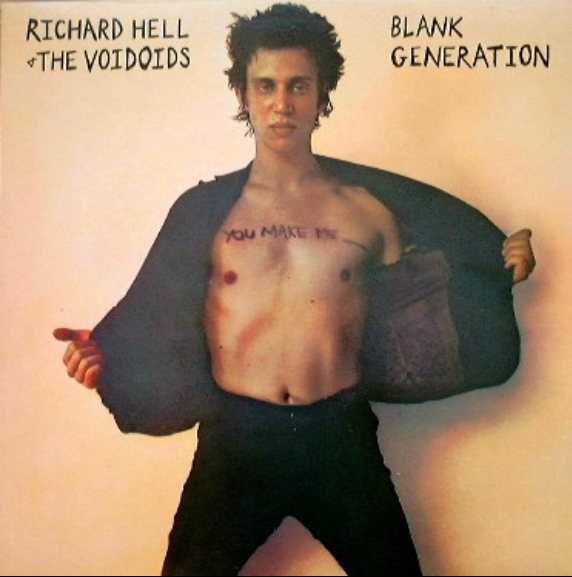
One day I remembered how much I’d loved that Richard Hell song and decided that I wanted to hear it again. Of course, I didn’t know it was by Richard Hell—all I knew was that it was called “Love Comes in Spurts” and that it had been in that Christian Slater movie. The latter information was useless, so all I could do was ask some the older punks if they knew the song. “Devo!” they said, sending me off to spend a couple of months digging through old Devo vinyl looking for the record with that song on it, to no avail. Because those records were, at the time, mostly unavailable on CD, the timeline for such a search was always a matter of weeks or months, predicated on waiting for someone to decide they didn’t want their old punk records anymore and sell them. Eventually I started asking questions of the haggard old guys that ran the record stores and a large bearded dude named Big Al said, “No, kid, not Devo! Who the fuck told you that? It’s Richard Hell and the Voidoids!”
“The metal band from Montreal?” I said.
“No, kid, not Voivod. Shit. The Void-OIDs. Record’s called Blank Generation.”
“Uh huh,” I said, promptly writing it down, “You got a copy of that?”
“Nah,” he said, “You don’t see it too often. It comes in from time to time. Gimme your number and I’ll call you if I see it.”
Scary as it was to give Big Al my number (He could call me! At home! Where I lived with my parents, who were civil servants!), I scribbled it down and handed it over. He wrote “BLANK GENERATION” in block letters over top of it and stuck in on a pile of stuff next to the phone. Then I began to wait, and to scour. I spent eight months searching for that record. Once a week I went to every one of the five or six cool record stores in town and checked their bins. Every time I visited relatives in another city, I asked my mom to drive me to the record stores, or I took the bus myself. When I returned home, I was back at the task. Once a week I asked Big Al, “is it in yet?” until he started greeting me at the door by growling, “We do not have a copy of Blank Generation. We have plenty of other records, though. Maybe you want to buy some?” At first he intimidated me, but over time I learned to make smartassed remarks back to him until I could provoke an impressed smirk. And I bought as many other records as I could afford as I waited for that Voidoids record to appear—Big Al himself gave me my first taste of Bad Brains, The Cramps, Hüsker Dü, Black Flag, the Germs, and more—discovering slowly the geography of a subterranean word held together by rock and roll.
To Big Al’s eye, I was, I think, the only fifteen year old obsessed with tracking down smacked out, nihilistic NYC art-punk recorded the same year he was born at a time when other kids the same age thought that Nirvana and Pearl Jam and Soundgarden were the pinnacle of rock and roll. But there were others like me looking for stuff that was just as off the wall, discovering, say, the Butthole Surfers, or Seven Year Bitch, or DRI, or Alice Donut, or whatever music weirdo kids heard and said, “This was meant for me.”
I found the Richard Hell record eventually, and it was great, but it could never have been as good as the eight months I spend looking for it, seeking, asking, learning how to participate among the older weirdos, getting up the courage to start shaving my hair off and dying it eye-gouging colours, learning the attitude required to talk back and not be pushed around for being myself. It was one of the most important periods in my life and it took place largely because there was a community there to support it, where old guys like Big Al knew that kids like me were going to come and need direction, and if you had the backbone to ask questions, you’d be rewarded with answers that proved more valuable with each passing day. That seems to me now a relic of another time.
If I was fifteen years old right now and I wanted to find a song like that, I’d download it in fifteen minutes on my parents’ computer, and I’d read the history of the band online and, maybe, if I was lucky, find a message board where folks were talking about old songs. It’d be amusing for a few minutes, and then I’d move on to something else. I wouldn’t meet any weird kids and borrow tapes from them, nor go by myself to a “punk” show not really knowing what that entailed, nor would I have to screw up my courage and talk to some crazy old dude in a Melvins t-shirt running a shadowy record store. I could do it all without leaving my house, and I’d get the song, for sure, but really, it wouldn’t end up mattering to me at all.
-----
This is going to sound dorky, but the first time I heard “Love Comes in Spurts” by Richard Hell was when I was thirteen years old, because Christian Slater’s young pirate DJ plays it the in the starry-eyed 1990 teenage rebellion flick Pump Up The Volume, which I saw on its opening weekend, and which changed my life. Prior to that I’d never understood that there was such a thing as underground music, what it meant, who made it or played it or listened to it, or why. Having just turned thirteen and seeing before me the impending absurd agony of my six-year sentence to adolescence, it all became clear—the gleeful beauty of puerile, filthy, restless music that accepted that everything was fucked and there was not a damned thing any kid could do about it.
Punk rock existed to save kids like me, kids who could neither understand nor stand the role they were expected to play among their peers (theatrically contrast against the more ominous banality of adulthood). When, a year and a half later, I finally procured what I knew was an actual punk tape (In God We Trust, Inc. by the Dead Kennedys), I was at the end of my rope and had I not heard that music then, I can only darkly speculate what would have happened to me. Driven crazy by lingering shadows of the cold war, the protofascist social hierarchy of my upper middle-class high school, and that peculiar adolescent solipsism that convinces kids that their lives define all life and what they experience at the age of fourteen will be the feeling they will live in forever, I had to dig to find a way out. And dig I did. In that just-pre-internet age, the “underground” was actually hidden from view, and you needed some idea of where the cool places in town were if you wanted to have access to the people, the music, the ‘zines, the clothes, the community that seemed most assuredly to exist but into which one couldn’t simply buy.
If you were too nervous or young to walk up to kids with green hair and big boots, the only other option was local BBS network, a pre-internet system where local weirdos could commune pseudonymously and talk about their weirdo shit. There you could find out the names and locations of the crazy record stores that smelled of hash and incense and had records with frightening covers made by ominous people who were obviously insane. Those stores were run by terrifying old guys (almost always guys) with gravelly voices and faded denim wardrobes and just talking to them made you feel the paucity of your years. That was part of the trick: you needed to get over the fear of going in, of asking questions, of finding out what suited you, in order to know what it was you needed to find—more in yourself than in the store. That’s where I went, and that’s how I found out where to start, but there was no one to help me along. And, frankly, thank god for that.
Eventually, having borrowed some punk tapes from the tamer weirdos at my school, having been to the cool spots and screwed up my courage enough to meet up with other freaks from the local BBS, I ended up with some weird friends and a key to the underground community that was happening in my town. It was a scene where on some level you needed to be involved—you came to the shows, met the other weirdos, made friends, tried on identities for yourself in front of an audience of your peers, and ideally went on to help create and foster the community by starting your own bands, your own zines, or your own venue. Outside of the kids I meet on the BBSes, I met my first group of punks when I went alone to a show at an art gallery and lit the brick outer wall on fire with a can of lighter fluid as we stood in line waiting to get in. I was, at that point in my life, experimenting with pyromania, but everyone was testing themselves somehow. You tried out the possibilities for who you could be, but unlike at high school where you’d be beaten and ostracized for showing any sign of not being a wealthy, athletic, heterosexual specimen of the master race, you could try out being queer, being crazy, being criminal, being any of the things that your community had held you so tightly to keep you from becoming.
One day I remembered how much I’d loved that Richard Hell song and decided that I wanted to hear it again. Of course, I didn’t know it was by Richard Hell—all I knew was that it was called “Love Comes in Spurts” and that it had been in that Christian Slater movie. The latter information was useless, so all I could do was ask some the older punks if they knew the song. “Devo!” they said, sending me off to spend a couple of months digging through old Devo vinyl looking for the record with that song on it, to no avail. Because those records were, at the time, mostly unavailable on CD, the timeline for such a search was always a matter of weeks or months, predicated on waiting for someone to decide they didn’t want their old punk records anymore and sell them. Eventually I started asking questions of the haggard old guys that ran the record stores and a large bearded dude named Big Al said, “No, kid, not Devo! Who the fuck told you that? It’s Richard Hell and the Voidoids!”
“The metal band from Montreal?” I said.
“No, kid, not Voivod. Shit. The Void-OIDs. Record’s called Blank Generation.”
“Uh huh,” I said, promptly writing it down, “You got a copy of that?”
“Nah,” he said, “You don’t see it too often. It comes in from time to time. Gimme your number and I’ll call you if I see it.”
Scary as it was to give Big Al my number (He could call me! At home! Where I lived with my parents, who were civil servants!), I scribbled it down and handed it over. He wrote “BLANK GENERATION” in block letters over top of it and stuck in on a pile of stuff next to the phone. Then I began to wait, and to scour. I spent eight months searching for that record. Once a week I went to every one of the five or six cool record stores in town and checked their bins. Every time I visited relatives in another city, I asked my mom to drive me to the record stores, or I took the bus myself. When I returned home, I was back at the task. Once a week I asked Big Al, “is it in yet?” until he started greeting me at the door by growling, “We do not have a copy of Blank Generation. We have plenty of other records, though. Maybe you want to buy some?” At first he intimidated me, but over time I learned to make smartassed remarks back to him until I could provoke an impressed smirk. And I bought as many other records as I could afford as I waited for that Voidoids record to appear—Big Al himself gave me my first taste of Bad Brains, The Cramps, Hüsker Dü, Black Flag, the Germs, and more—discovering slowly the geography of a subterranean word held together by rock and roll.
To Big Al’s eye, I was, I think, the only fifteen year old obsessed with tracking down smacked out, nihilistic NYC art-punk recorded the same year he was born at a time when other kids the same age thought that Nirvana and Pearl Jam and Soundgarden were the pinnacle of rock and roll. But there were others like me looking for stuff that was just as off the wall, discovering, say, the Butthole Surfers, or Seven Year Bitch, or DRI, or Alice Donut, or whatever music weirdo kids heard and said, “This was meant for me.”
I found the Richard Hell record eventually, and it was great, but it could never have been as good as the eight months I spend looking for it, seeking, asking, learning how to participate among the older weirdos, getting up the courage to start shaving my hair off and dying it eye-gouging colours, learning the attitude required to talk back and not be pushed around for being myself. It was one of the most important periods in my life and it took place largely because there was a community there to support it, where old guys like Big Al knew that kids like me were going to come and need direction, and if you had the backbone to ask questions, you’d be rewarded with answers that proved more valuable with each passing day. That seems to me now a relic of another time.
If I was fifteen years old right now and I wanted to find a song like that, I’d download it in fifteen minutes on my parents’ computer, and I’d read the history of the band online and, maybe, if I was lucky, find a message board where folks were talking about old songs. It’d be amusing for a few minutes, and then I’d move on to something else. I wouldn’t meet any weird kids and borrow tapes from them, nor go by myself to a “punk” show not really knowing what that entailed, nor would I have to screw up my courage and talk to some crazy old dude in a Melvins t-shirt running a shadowy record store. I could do it all without leaving my house, and I’d get the song, for sure, but really, it wouldn’t end up mattering to me at all.
Tuesday, August 26, 2003
Will Oldham interview, August 2003
I did this interview with Will Oldham at the Babylon club in Ottawa the afternoon before his solo show that evening squeezed into a day off on his North American tour opening for Bjork. Oldham is legendarily reticent about interviews, but I was surprised to discover that after the first couple of questions, he sat back and began to talk with comparative ease (at least by contrast to his mood as we sat down, at which point he got up, said, "I'm going to need a beer to get through this," and went to the bar). It was broadcast on CKUT Montreal and I transcribed it for some reason, though now I can't remember what that was. I suppose it was ultimately so that you could read it. And now, here you may:
JB Staniforth: Are you happy doing what you’re doing with this big tour?
Will Oldham: Sometimes.
I got an idea from your tour diaries, but I want to know if you’re enjoying doing 10,000-person stadium dates.
I really don’t know how you can conceive of it—it’s really sort of not like playing music. It’s just like doing something. It was a little bit like playing music the last time, the second New York show, because I had a friend come up and play with me. But otherwise, it really is just like doing something, like… [long pause] …rock climbing, more than it is like playing music.
Is there any personal fulfilment in having tens of thousands of people clapping?
No.
Really?
There’s not a lot of personal fulfilment in five or six hundred people clapping. There’s more personal fulfilment, like, knowing that you’ve made it through the night playing music. I can appreciate when an audience is great, or is rambunctious, or when it changes, but I don’t appreciate it as the goal. I don’t appreciate it the same way.
What kind of effect does it have on your relationship with yourself to be standing and playing these songs that are—I mean, I recognize that your music isn’t personal, in the sense that you don’t write about yourself, but it’s still a personal creation.
Sure, even just being a performer in front of people.
Is it difficult to get in front of 10,00 people and do what is, to them or to you, not necessarily an intimate thing at all?
The main reason it isn’t difficult is because it’s a challenge on some level, and it’s doing something that’s unknown, and so if someone said, “Do you want to jump off of this cliff into that water,” I would say yes before I’d say no. It’s more like playing… [trails off]. I have no idea what anyone in the audience is thinking, beginning, middle, or end. Every once in a while, there will be this weird feeling, where you feel like you know what someone’s thinking in the audience. But as far as it being intimate at all, it changes. On one given night, the intimate part could be just the melody, the intimate part could be the clothing that you’re wearing. The intimate could have something to do with one part of a lyric, or a whole song, or a series of three songs that you put together. So, it remains intimate in a way, unless the distraction is so great that you don’t have an experience at all, except like in a traffic jam—which it can be, sometimes. But rarely, because there’s enough going on, and there’s enough to think about, that you don’t get distracted.
Is it a pain in the ass to have to be the opener?
Well, is it a pain in the ass to have to be the opener? I wouldn’t put myself in the position of opening for almost anybody ever, and I almost never have, because it doesn’t configure. The main reason for this is that I was invited by someone I respect a lot, someone whose show I wanted to see. So, for me, my meal ticket is opening. That’s the reason I can be here. I’m glad to be here, because I’m enjoying everything else about the trip, which is why I’m going, rather than going to play my own music. Because I feel like I don’t know if anyone’s going to listen. I’m going to play the music as well as I can, but the reason I’m going is because I wanted to see these shows and I thought it’d be an interesting trip. I think opening sucks, unless it’s a similar situation where you have a symbiotic relationship with the other group, whether it’s the headliner, and you travel for a period of time with them, and there’s some sort of musical evening happening, some sort of correlation, some sort of A to B that the audience is going to go through if they pay attention. Then it’s okay.
Do you think in terms of the audience when you’re writing music?
Yeah, I think so.
Is there something you’re trying to bring about in them as a reaction, or pathos, or is it just—
Sometimes I try to entertain—
I recognize that it’s a bit of a bum question.
The whole reason for making records is that, ideally, there’s an audience. It’s inextricable, the concept of writing for an audience. It’s always thinking, like, “Will this make any sense? Will this melody sink into someone’s head, or will it just go right past them?” The only real thing you can base it on is your own experience. You try to listen to different music that affects people in different ways and figure out why it does, and say, “I think this song will work if it’s done like this, because I know it works on this level, and somebody—I don’t know how many people, maybe five, but ideally more—will pick up on it, because that’s what’s being put into it. And it’s always thinking that it’s for the audience.
I’m not much of a musician myself, but I think that in terms of music, it’s almost like building bombs, because you never know what it’s going to do people.
That’s true.
I know having an immensely personal reaction to music you’ve done, and seeing people having intense personal reactions to other music that I just don’t get.
Right, like Ani DiFranco, or something.
Sure. But it must be pretty bizarre from the position of the person who’s making the music to know that for some people, it’s just going to go flying over their heads, or they’ll just turn their back on it, but for other people, it’s going to lay them on the ground.
Yeah. And at the same time, that’s only at the present moment. Because that person who’s on the ground, maybe then, the rest will go flying over them, hit the person who’s turned their back, and they’re now going to turn around and listen.
When I listen to the early Palace records, I listen to the progression of the past ten years. It seems to me as though the things that you’re writing are a lot less manic, confused. But at the same time, it seems as though there’s much more of a comfort, a sense of your own capabilities. Is that true?
I think so, yeah. The way that I think of it is that making the Palace records was like going to college. Rarely in all of those—or just sometimes—the lyrics can be more. Which is one reason that I never bothered printing them in those records, just that the lyrics might just be musical, they might just work on a visceral level, and were not intended to be on the printed page, ever. And they were worked, like, “If it fits into this verse, on a rhythmic level, if it makes the melody sound good, if somehow there can be something that approaches a theme in the song, then that’s great, that’s perfect.” But it was all a question of “How do you take this totally amorphous song and record it?” So we had to go into the studio and learn that. To the point that after making Viva Last Blues, it was sort of, “Okay, now I know how to do all of this stuff. Does that mean I should stop making records now?” A part of the excitement was always in, “Let’s try this, let’s try this.” And then, it’s like, do you continue with what you know, or do you do something completely different? Trying to figure out if life is only a discovery thing, or if it’s about learning to do something with the discovery.
It was after Viva Last Blues that you started printing the lyrics.
Mm hmm.
With I See A Darkness?
With Arise, Therefore, and Joya.
I’m not that familiar with those two records, but with I See A Darkness, was that because you were willing to deal openly with the issue of death?
At that point, it was—I mean, there have been various times when it’s been, like, everything seems to matter so much, and yet, and yet… Those kinds of times. Or where I don’t know why I’m happy, why I’m not happy, for what purpose, for what person. And with that record, and a couple of songs right before that record, I said, “Let’s deal with all these things, but try to make it as fun as possible. And try to formalize it as well. Let’s sort of deal with these things, but then also make it something that resemble music, with a structure. Maybe even an A,B, C-type structure.” Just trying to make it a little bit fun. An Addams Family kind of fun.
I See A Darkness has always seemed to me like a really fun record.
Yeah, I think it’s really fun.
Recently a friend of mine lost her mom, she died really suddenly. My friend didn’t listen to music for a long time after that, but when she finally started to buy records again, I recommended that to her as something to start with. A couple of friends of mine said, “Jeez, that’s really morbid.” But I didn’t think that at all. In my experience, that record was about having some fun with death as something real.
Yeah.
Has your relationship with death sort of been sorted out a little further since then?
No. [pause] It always seems like there are periods of time when, say, you’re on a plane, and there’s heavy turbulence, sometimes you think, “that’s fine. If this goes down, this is totally fine.” There are other times when you think, “this is not the right time. This is a bad time.” If it’s a bad time, it’s usually because everything isn’t right. It seems like I’ve had more of those “it isn’t right” periods of late than times when it’s okay for the plane to go down.
I’m sorry to hear that.
It’s okay—it gives you the motivation to run away from the plane when it lands. You get your bags, you start doing something else.
JB Staniforth: Are you happy doing what you’re doing with this big tour?
Will Oldham: Sometimes.
I got an idea from your tour diaries, but I want to know if you’re enjoying doing 10,000-person stadium dates.
I really don’t know how you can conceive of it—it’s really sort of not like playing music. It’s just like doing something. It was a little bit like playing music the last time, the second New York show, because I had a friend come up and play with me. But otherwise, it really is just like doing something, like… [long pause] …rock climbing, more than it is like playing music.
Is there any personal fulfilment in having tens of thousands of people clapping?
No.
Really?
There’s not a lot of personal fulfilment in five or six hundred people clapping. There’s more personal fulfilment, like, knowing that you’ve made it through the night playing music. I can appreciate when an audience is great, or is rambunctious, or when it changes, but I don’t appreciate it as the goal. I don’t appreciate it the same way.
What kind of effect does it have on your relationship with yourself to be standing and playing these songs that are—I mean, I recognize that your music isn’t personal, in the sense that you don’t write about yourself, but it’s still a personal creation.
Sure, even just being a performer in front of people.
Is it difficult to get in front of 10,00 people and do what is, to them or to you, not necessarily an intimate thing at all?
The main reason it isn’t difficult is because it’s a challenge on some level, and it’s doing something that’s unknown, and so if someone said, “Do you want to jump off of this cliff into that water,” I would say yes before I’d say no. It’s more like playing… [trails off]. I have no idea what anyone in the audience is thinking, beginning, middle, or end. Every once in a while, there will be this weird feeling, where you feel like you know what someone’s thinking in the audience. But as far as it being intimate at all, it changes. On one given night, the intimate part could be just the melody, the intimate part could be the clothing that you’re wearing. The intimate could have something to do with one part of a lyric, or a whole song, or a series of three songs that you put together. So, it remains intimate in a way, unless the distraction is so great that you don’t have an experience at all, except like in a traffic jam—which it can be, sometimes. But rarely, because there’s enough going on, and there’s enough to think about, that you don’t get distracted.
Is it a pain in the ass to have to be the opener?
Well, is it a pain in the ass to have to be the opener? I wouldn’t put myself in the position of opening for almost anybody ever, and I almost never have, because it doesn’t configure. The main reason for this is that I was invited by someone I respect a lot, someone whose show I wanted to see. So, for me, my meal ticket is opening. That’s the reason I can be here. I’m glad to be here, because I’m enjoying everything else about the trip, which is why I’m going, rather than going to play my own music. Because I feel like I don’t know if anyone’s going to listen. I’m going to play the music as well as I can, but the reason I’m going is because I wanted to see these shows and I thought it’d be an interesting trip. I think opening sucks, unless it’s a similar situation where you have a symbiotic relationship with the other group, whether it’s the headliner, and you travel for a period of time with them, and there’s some sort of musical evening happening, some sort of correlation, some sort of A to B that the audience is going to go through if they pay attention. Then it’s okay.
Do you think in terms of the audience when you’re writing music?
Yeah, I think so.
Is there something you’re trying to bring about in them as a reaction, or pathos, or is it just—
Sometimes I try to entertain—
I recognize that it’s a bit of a bum question.
The whole reason for making records is that, ideally, there’s an audience. It’s inextricable, the concept of writing for an audience. It’s always thinking, like, “Will this make any sense? Will this melody sink into someone’s head, or will it just go right past them?” The only real thing you can base it on is your own experience. You try to listen to different music that affects people in different ways and figure out why it does, and say, “I think this song will work if it’s done like this, because I know it works on this level, and somebody—I don’t know how many people, maybe five, but ideally more—will pick up on it, because that’s what’s being put into it. And it’s always thinking that it’s for the audience.
I’m not much of a musician myself, but I think that in terms of music, it’s almost like building bombs, because you never know what it’s going to do people.
That’s true.
I know having an immensely personal reaction to music you’ve done, and seeing people having intense personal reactions to other music that I just don’t get.
Right, like Ani DiFranco, or something.
Sure. But it must be pretty bizarre from the position of the person who’s making the music to know that for some people, it’s just going to go flying over their heads, or they’ll just turn their back on it, but for other people, it’s going to lay them on the ground.
Yeah. And at the same time, that’s only at the present moment. Because that person who’s on the ground, maybe then, the rest will go flying over them, hit the person who’s turned their back, and they’re now going to turn around and listen.
When I listen to the early Palace records, I listen to the progression of the past ten years. It seems to me as though the things that you’re writing are a lot less manic, confused. But at the same time, it seems as though there’s much more of a comfort, a sense of your own capabilities. Is that true?
I think so, yeah. The way that I think of it is that making the Palace records was like going to college. Rarely in all of those—or just sometimes—the lyrics can be more. Which is one reason that I never bothered printing them in those records, just that the lyrics might just be musical, they might just work on a visceral level, and were not intended to be on the printed page, ever. And they were worked, like, “If it fits into this verse, on a rhythmic level, if it makes the melody sound good, if somehow there can be something that approaches a theme in the song, then that’s great, that’s perfect.” But it was all a question of “How do you take this totally amorphous song and record it?” So we had to go into the studio and learn that. To the point that after making Viva Last Blues, it was sort of, “Okay, now I know how to do all of this stuff. Does that mean I should stop making records now?” A part of the excitement was always in, “Let’s try this, let’s try this.” And then, it’s like, do you continue with what you know, or do you do something completely different? Trying to figure out if life is only a discovery thing, or if it’s about learning to do something with the discovery.
It was after Viva Last Blues that you started printing the lyrics.
Mm hmm.
With I See A Darkness?
With Arise, Therefore, and Joya.
I’m not that familiar with those two records, but with I See A Darkness, was that because you were willing to deal openly with the issue of death?
At that point, it was—I mean, there have been various times when it’s been, like, everything seems to matter so much, and yet, and yet… Those kinds of times. Or where I don’t know why I’m happy, why I’m not happy, for what purpose, for what person. And with that record, and a couple of songs right before that record, I said, “Let’s deal with all these things, but try to make it as fun as possible. And try to formalize it as well. Let’s sort of deal with these things, but then also make it something that resemble music, with a structure. Maybe even an A,B, C-type structure.” Just trying to make it a little bit fun. An Addams Family kind of fun.
I See A Darkness has always seemed to me like a really fun record.
Yeah, I think it’s really fun.
Recently a friend of mine lost her mom, she died really suddenly. My friend didn’t listen to music for a long time after that, but when she finally started to buy records again, I recommended that to her as something to start with. A couple of friends of mine said, “Jeez, that’s really morbid.” But I didn’t think that at all. In my experience, that record was about having some fun with death as something real.
Yeah.
Has your relationship with death sort of been sorted out a little further since then?
No. [pause] It always seems like there are periods of time when, say, you’re on a plane, and there’s heavy turbulence, sometimes you think, “that’s fine. If this goes down, this is totally fine.” There are other times when you think, “this is not the right time. This is a bad time.” If it’s a bad time, it’s usually because everything isn’t right. It seems like I’ve had more of those “it isn’t right” periods of late than times when it’s okay for the plane to go down.
I’m sorry to hear that.
It’s okay—it gives you the motivation to run away from the plane when it lands. You get your bags, you start doing something else.
Subscribe to:
Posts (Atom)